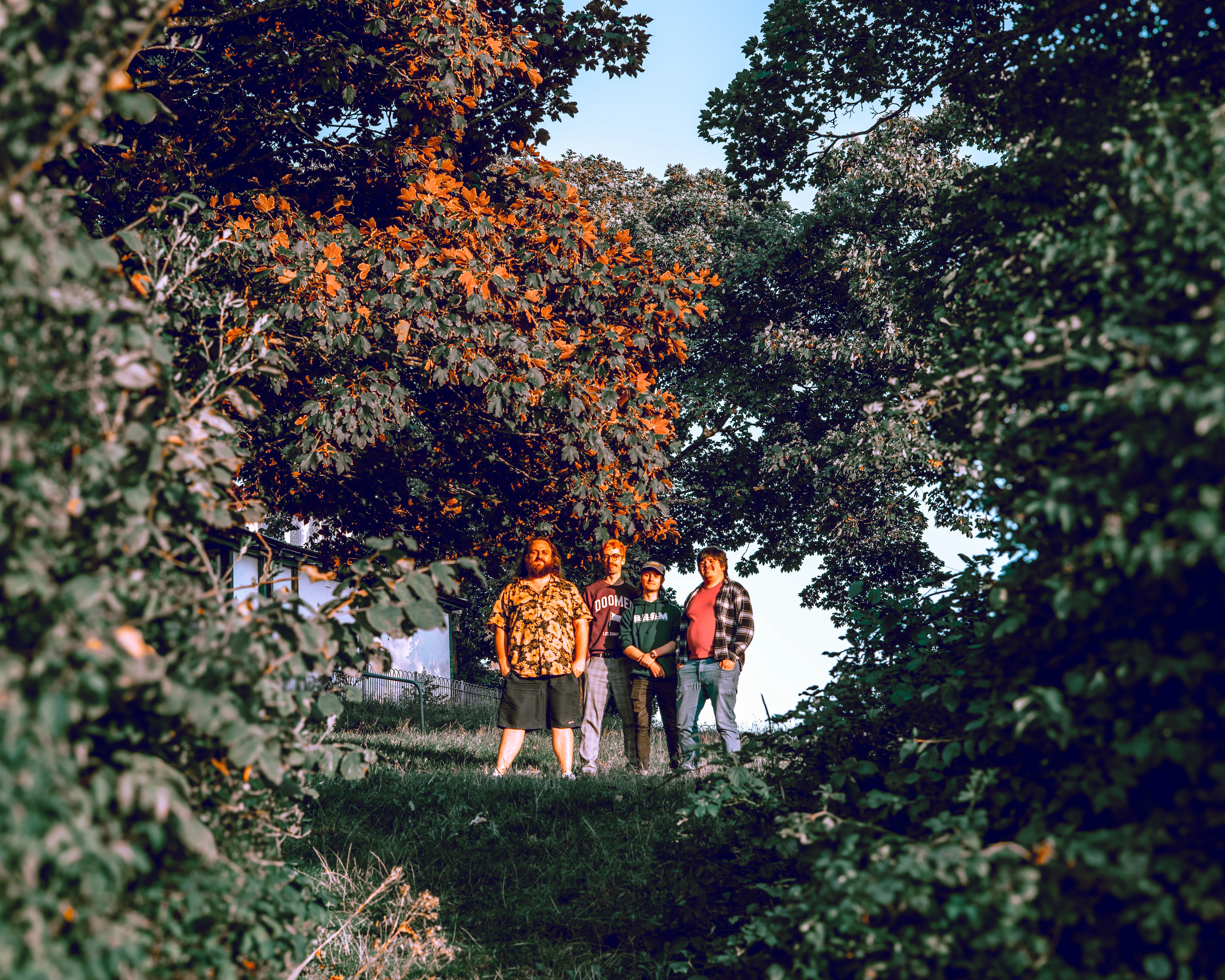
 Photograph: Eddie Whelan
Black Country, New Road is one of those artists whose name I had heard thrown around for years before I properly listened to them, and one of my biggest regrets is not listening to my best friend when she tried repeatedly to get me into them. Any time the subject of music would come up she would recommend them, and I’d laugh at her, saying they were too depressing and droney - oh how wrong I was. I first listened to Ants From Up There during sixth form, and as is a common experience with post-Ants From Up There fans, I was devastated to find out that their frontman, Isaac Wood, had left the band four days before the album’s release. Fans were left in limbo, wondering how or if the band would move forward after losing such a pivotal member, but the remaining members assured that the band was not over.
And thank god they chose to continue.
Whilst the sound of Ants From Up There is completely iconic, and I acknowledge the impact that Wood has had on the UK music scene, the band’s subsequent albums pushed them forwards into feeling even more like a band. The more collaborative aspects have placed a spotlight on every member’s talent, allowing them to grow into their artistry, and consequently produce the fascinating project that is Forever Howlong. I know that it's tempting to compare recent releases to their original albums, but I’d argue that it’s completely reductive to even try to compare Forever Howlong to Ants From Up There; it’s like comparing day and night, literally.
Forever Howlong is a satisfying mixture of indie-rock lyrics, baroque-pop instrumentals, and occasionally it even crosses into the territory of jazz influences with its meandering saxophone and ever-changing tempos. The instrumentals often have a sunny, theatrical tone about them, yet the band has still maintained their darker lyrical themes, and I think the complexity of emotions conveyed in this album is what drew me to it in the first place.
'Besties' and 'Happy Birthday'
The first song I heard was the opening track and lead single ‘Besties’, which was violinist Georgia Ellery’s vocal debut in the band. Sonically, this track is very upbeat and open, with its baroque-pop harpsichord and synths, yet the lyrics reveal a darker truth. The narrative voice here, (perhaps a character, perhaps Ellery herself) seems to despair over unrequited feelings for a close friend, stating things like “I know what’s expected of me/ Besties, night and day”, and “Are you sure?/ I know I want something more” – an experience which is unfortunately all too relatable for sapphic listeners. This song is quite a big jump from the band’s previous projects, but nonetheless I feel like this was the perfect choice to introduce the album. It prepares fans for the new sonic tone and the “vocal hand-over”, whilst the lyrics are probably some of the most thematically accessible off the album, being both relatable and relatively on-the-nose with their meaning.
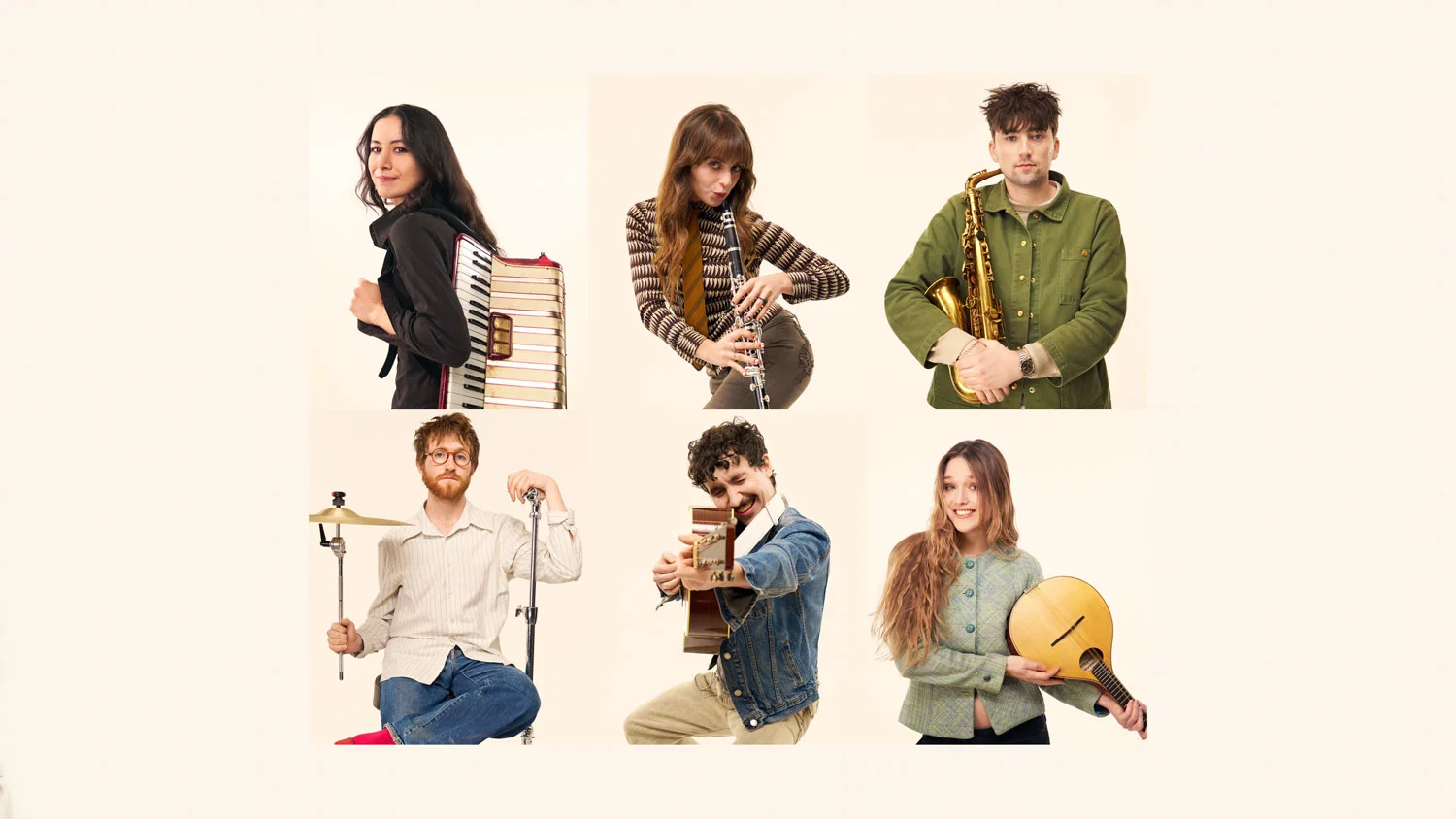
From there, I listened to the next single released: ‘Happy Birthday.’ This time, it was bassist Tyler Hyde who was vocally highlighted, and it was her vocals and storytelling which took me from thinking “interesting album” to complete obsession. In my opinion, the girls’ vocals (Georgia Ellery, May Kershaw and Tyler Hyde) are one of the strongest parts of this album, whether they’re taking the reins with their lead vocals, or blending their voices together in harmonies that feel almost addictive. Songs like ‘Mary’, which I’d argue is one of the most underrated tracks on the album, really highlight their vocal talent, whilst the instrumentals work in tandem to build a clear narrative sonically as well as lyrically. Even the backing vocals stand-out; the iconic “bada ba da da” which flows through the end of “Happy Birthday” has become a staple reference in my friend group.
'Two Horses' and 'For the Cold Country'
The vocals don’t just stand victorious on their own, however; they blend seamlessly with the instrumentals. Rather than just supporting the lyrics, the instruments actively enhance them, involving new layers of emotion which really pull you into the stories that the band is trying to tell. ‘Two Horses’ (Ellery) and ‘For the Cold Country’ (Kershaw) exemplify this perfectly. Both songs feel like opposite sides of the same coin, with their fantastical, epic-like structures reminiscent of old early modern tales which hold deeper, more personal stories beneath the surface. ‘Two Horses’ tells the wild-west story of a traveller who forms an alliance with a man who will eventually expose himself as a “liar, a leech and a beggar”, reflecting themes of vulnerability and the dangers of intimacy when looking for a relationship. ‘For the Cold Country’ explores similar themes about a quest for love and the complexities of intimacy, this time using the metaphor of a knight who swears that “I’ll take off my armour/ If you promise to stay.” Vocally, these songs are emotive, but it is the instrumentals that really turn them from a narrative to a story.
The instruments in ‘Two Horses’ perfectly reflect the setting, recalling the freedom of riding on horse-back with the wind in your hair as the tempo slowly builds. Once the narrator finally finds “a man to lean on”, the instruments become more open, finally interrupting the rolling guitar we have heard throughout and exchanging it for a bouncy bassline, which feels like a gallop across open plains. The culmination of the song, where the narrator’s horses are killed, is paired with an excellent instrumental crescendo which is very evocative of a fight scene from a classic Western. When paired with Ellery’s vocals, the chaos is unavoidable.
If ‘Two Horses’ feels orange with its bright mandolin and jumping bass, ‘For the Cold Country’ is definitely blue. As mentioned earlier, this song explores similar themes of vulnerability and its dangers, but this time the character seems to be haunted by his loneliness. The instrumental in this song is stirring, feeling almost early-modern with its orchestral harmonies, harpsichord and melancholy guitar. Structurally, it is similar to 'Two Horses', with a long, rolling opening section which allows the lyrics to set the scene before the song reaches its climax. Unlike the traveller, however, the knight never finds connection, and the sprawling crescendo reflects his increasing desperation as he cries out “Are you there?/ Can you see me?/ Are you listening?” Although structurally similar, both songs manage to portray completely different (yet equally as haunting) stories, which captivate listeners in a way that I haven’t experienced with many albums.
'Nancy Tries to Take the Night'
Undoubtedly my favorite vocalist/writer, however, is Hyde. Her vocals are powerful, both technically and emotively, and her storytelling skills tug at my heartstrings every time. This is particularly evident in songs like ‘Socks’ and ‘Nancy Tries to Take the Night’, which are my two personal favourite tracks.
I’ve seen some people call Forever Howlong the “female perspective” of Black Country, New Road, and whilst I mostly think that’s a reductive claim (would people call Ants From Up There the “male perspective” if there was never a vocal shift?) Hyde really gives a testament to women’s experiences in ‘Nancy Tries to Take the Night.’ In her own words, she has described the song as:
“a collection of snippets of real-life experiences or things I've witnessed, all to do with women and struggles specific women or general women or myself have been through.”
As we have seen previously on the album, she sets her story in a fantastical, more metaphorical world, using Nancy from Oliver Twist as a basis. The lyrics evoke similar imagery to ‘This Night Has Opened My Eyes’ by The Smiths, telling the story of a woman (possibly a sex-worker) who has become pregnant but cannot look after the child, forcing her to make a decision she ultimately seems to regret.
The song opens with an absolutely gorgeous guitar arrangement, managing to already tell a story of melancholy without a single word. This introduction is a great demonstration of the band’s range, since whilst other songs such as ‘Happy Birthday’ use many instruments to tell a story, ‘Nancy’ manages to convey so much emotional complexity even with minimal instruments. Hyde’s vocals flow in naturally to the instrumental, and the production here is arguably the best the band has had. Whilst listening to the album with headphones, I often under-appreciate the intricacy of each sonic layer as the instruments blend together so seamlessly. It was only once I watched videos of them playing it live that I really began to notice each individual part.
For example, the guitar intro is split between two guitars, and it feels almost like they are having a conversation with each other - or perhaps fighting to be heard, reflecting the difficult decisions the protagonist must make. Shortly afterwards, drummer Charlie Wayne comes in with the banjo, adding yet another layer of subtle complexity, and preparing for the song's more orchestral progression later on. The meandering saxophone riff which pervades throughout is catchy in the most devastating way possible, bringing a sense of oxymoronic warmth as Hyde’s fervent vocals speak the true pain of the song. Repeated declarations of “Do you want it?” not only reflect the protagonist’s choice of whether to keep her child, but they address the listener directly in a way that removes them from the bystander position and pulls them into Nancy’s world. Reinforcing this, Hyde layers the meaning of “anon”, not only addressing the listener, but also acknowledging the stranger that her baby will be passed on to. The final line, “Nancy took the night and she's gone, anon,” is arguably the most devastating line of the song. Paired with droning flute, Hyde tells us Nancy’s fate; “anon” here switches from an address to a verb, Nancy has disappeared completely.
'Socks'
The lyricism of ‘Nancy’ is a great testimony to Hyde’s storytelling ability, but her most powerful song for me is ‘Socks’, in which she tells amore personal story of regrets, anxieties and hopes. The song traces the ups and downs of life with its tempo changes, switching from gentle piano to overwhelming crescendos. I’ve seen people argue that the song feels a bit incoherent, and although I can see why the constant changes might feel jarring, I feel like it perfectly reflects how quickly your life can shift, carrying you with it rather than easing you into the future. The droning guitar riff which runs throughout the first half of the song seems to build endlessly, three tense notes that are never entirely fulfilled, like the bubbling anxious thoughts that the lyrics portray. Rather than developing into a chord progression which fulfils itself, the guitar gets traded out for piano, which brings a layer of melancholy to the already tense atmosphere of the song. Accompanying the piano are the lyrics “In joke there comes the truth,/ I am not blinded by my youth”, which despite its simplicity, is a line which speaks a lot to me. It feels as though the singer is aware that she’s performing, whether it's within the song or with the attitude she presents towards others, but under the surface she is very aware of the issues she’s facing.
Shortly afterwards, a more mellow chorus is introduced, where the atmosphere shifts for a few lines towards a more hopeful attitude. Lyrics like “Our life holds a light no life has held before” convey the strange paradox of human life, where we should be excited because we get to live such a unique experience, but it can also feel like being plunged into an abyss with no guidebook. The instrumentals yet again reflect this as they become more chaotic, the building guitar riff from earlier now being played on piano: it feels like the anxiety has now turned to panic.
But as the song explains, “all things must pass”, and the crescendo settles once again as the lyrics attempt to comfort the listener. Hyde breaks the fourth wall, asking if the listener feels understood before the chorus interrupts the verse, cutting her off. Just like with the chorus, the stresses of life interrupt our tender moments and sweep us away with them, but the lyrics maintain their hope regardless. As with other songs on this album, one of the most interesting parts is the band’s ability to convey conflicting emotions simultaneously, and the outro to this song is my favourite example of this. The closing lines seem to almost accept their defeat, explaining that “no matter which one you choose/ Baby, you’re always gonna lose”. It is quickly revealed that these are not the narrator’s words though, rather “that’s what the demons say”. The true final line stands uninterrupted, both musically and lyrically, as the singer pushes back against the demons: “I never liked those guys anyways.” This is by far my favourite song from the album, as it is so simple yet so poignant, and Hyde’s voice is arguably at its most powerful here.
'Goodbye (Don't Tell Me)'
Some people have argued that Forever Howlong as a whole feels more like a playlist than a cohesive album, but I disagree. For the most part, the album has a good sense of instrumental cohesion which ties the songs together really well. The band has not explicitly stated whether it is conceptual, but the world building is strong and feels like a journey through many different settings and perspectives. There is one song I do think feels slightly out of place, however, and that is the closing track ‘Goodbye (Don’t Tell Me)’. Whilst this is one of my favourite tracks, musically it feels far more poppy than the rest of the album, which leans more towards theatrical baroque-rock. As is characteristic of Ellery’s writing, the lyrics are also a lot more on-the-nose, with the metaphor of a “seedling” directly reflecting the singer’s difficult relationship rather than creating a new world which parallels realistic experiences. However, as with ‘Besties’, I love how Ellery’s often simple lyricism is powerful enough to evoke strong emotions and convey complex experiences, whilst still being accessible enough to feel relatable. The choice to both begin and end the album with Ellery’s songs gives it a very cyclical feel, tying together all the intricate concepts which have been explored throughout the rest of the songs.
That being said, I think with time the band will grow into their new voices, and I’m really excited to see what they produce going forward. There are many more songs that I could go into depth about; this album has quickly reached the status of a “no-skip album” on my Spotify and record player, but from here I’ll let you listen to the rest of the album and discover the incredible musicality yourself. If you’re a fan of The Beatles, Pretty. Odd-era Panic! At the Disco, Kate Bush, or if you just appreciate bands which blur the lines between genres, Black Country, New Road could be a great addition to your playlists in 2026.