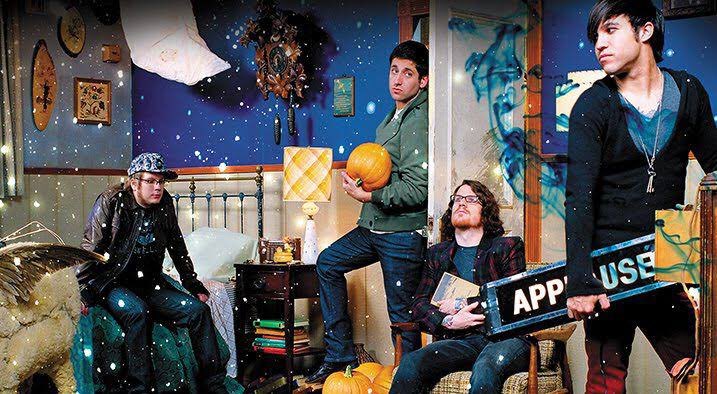
 Infinity on High album photoshoot. Source: X.com
“Be clearly aware of the stars and infinity on high. Then life seems almost enchanted after all.”- Vincent van Gogh, 1888
Following the success of their 2005 album From Under the Cork Tree, Fall Out Boy had a huge task on their hands with creating a follow up. While they could have remained in the safe predictability of pop-punk, they knew they had to make something more daring. The result was 2007’s Infinity on High.
IOH saw the band harnessing certain conventions of pop-punk, and defying others in search of a fresher sound. They began experimenting with new genres, namely R&B and soul, prophetic of frontman Patrick Stump’s later solo efforts. It was also packed with guest performers, from fellow pop-punk artists Ryan Ross and Chad Gilbert, to some more unexpected artists such as Babyface and Jay-Z.
Lyrically, the album is a response to the band’s quick rise to fame off the back of FUCT’s success. Sometimes it is indulgently self-referential; at others it is deeply poetic. In a blog post, bassist and lyricist Pete Wentz reveals that “if FUCT was the caterpillar album, Infinity on High was the cocoon one.”
With this in mind, we can see how the album captures the band in the midst of a transition. Now dealing with new media attention as well as old fans, it was a way for them to navigate everything while staying true to themselves.
Title and Artwork
The album’s title is a direct reference to the letters of Vincent van Gogh. The letter in question was written shortly after his move to the French city of Arles, in hope of establishing an artist’s community. The letters radiate this kind of hopeful writing, even in the artist’s darkest moments. He often reflects on the process of creating art itself - its difficulties, the artist’s isolation, and their compulsion to create despite adversity. Struggling to sell paintings, van Gogh describes himself as “a nonentity, an eccentric, or an unpleasant person - somebody who has no position and never will have, in short, the lowest of the low.”
Suffering from epilepsy and manic depression, he also echoes artist Jean-François Millet’s belief that suffering can be a catalyst to high art:
“I would never do away with suffering, for it is often what makes artists express themselves most forcefully.”
Wentz’ choice to use this for the title is a recognition of inner strength, a wondrous appreciation of the world around us, and above all finding hope in unlikely places.
The artwork - designed by Todd Fjelsted and Chuck Anderson - mirrors this, utilising celestial and bizarre imagery. A backdrop of the moon and stars is imposed onto a bedroom wall, adding a touch of the sublime to an otherwise ordinary setting; a crow perches on a table, an omen of metaphorical death and change; a wardrobe door stands ajar, representing a transitional period. It is also indicative of the band's growing ambitions, literally reaching for the stars with their venture into new genres and guest features.
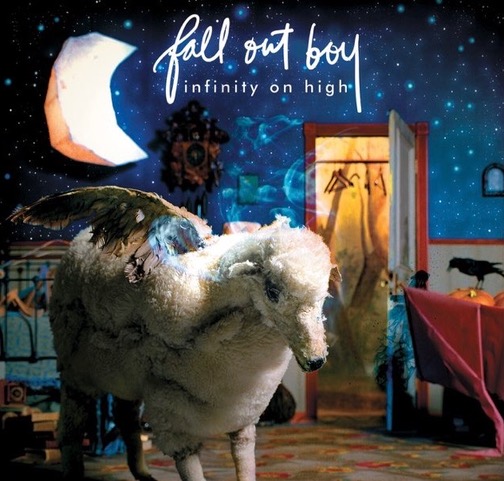
Infinity On High official album cover
The most prominent feature, however, is the winged sheep. The divine presence could be a reference to Chrysomallos, a golden-fleeced winged ram that appears in Greek mythology. It could simply be another element of this strange, dream-like realm. Photographer Pamela Littky recalls shooting the album cover:
“Pete had a vision of a dreamlike/nightmarish bedroom scene [featuring] anything that could take place in your subconscious dream state.”
Dreams are a recurring theme in the artwork, with the CD booklet featuring ‘The Moon’ tarot card. This is associated with dreams and the subconscious, as well as hidden truths being revealed.
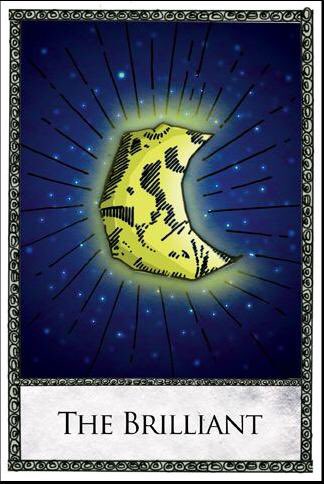
Official artwork from the CD booklet
Overall, the beauty of nighttime stands out on the cover. For Wentz, IOH always reminds him of nighttime, “both the anxiety of insomnia and the peace of being awake when everyone else is asleep.” For artists especially, nighttime can be particularly conducive for the imagination - a period in which we are removed from any pressures or interactions. A different version of ourselves can emerge at night, when everything is stripped away and there is only a starlit sky.
Music
Within FOB exists one of the best songwriting duos in alternative music. This stands out on IOH, with Stump composing music for Wentz’ lyrics. It is also the first FOB album to feature Stump as producer, alongside R&B artist Babyface, Neal Avron (FUTC) and Butch Walker.
The album’s sound is at once rooted firmly in pop-punk territory, and illustrative of the band’s appreciation for other genres. Octave based riffs feature on tracks such as ‘Thriller’ and ‘Hum Hallelujah’’; Stump’s soaring vocals run throughout, with gorgeous harmonies on every other line. He blends a very loose enunciation with chorally correct vowels - a widely used technique within pop-punk, in which singers modify vowels to sound clearer and more emphatic. Elsewhere, however, his wide range lends itself effortlessly to a more soul-influenced sound.
IOH opens with the defiant ‘Thriller’, featuring spoken word from Jay-Z to welcome us into the album. The song then takes a sharp turn, launching straight into a thunderous rhythm section. This is achieved by drummer Andy Hurley’s use of double kick pedals, and Joe Trohman’s chugging guitar chords.
The song then blends into ‘The Take Over, The Breaks Over’. A punchy, staccato guitar riff carries the entire song, in what Stump describes as a Bowie-esque fashion. It also features a joint guitar solo played by Ryan Ross (formerly) of Panic! At The Disco, and Chad Gilbert of New Found Glory.
Another notable element of the composition is Wentz’ use of fry screams. In homage to the band’s earlier material, these feature in the bridges of ‘The Carpal Tunnel Of Love’ and ‘Bang the Doldrums,’ adding a harder edge to the album.
In terms of guitar parts, Stump and Trohman alternate between rhythm and lead. After hearing Stump’s work, Trohman would fill the gaps with his own Johnny Marr-inspired compositions. This can be heard in the verse of ‘Doldrums,’ which contains some complex arpeggios. Various other songs also feature some Queen-esque guitar licks.
The sound starts to deviate on ‘This Ain’t a Scene, It’s an Arms Race’. The track is a perfect example of the band’s alchemy, and Stump once described it as "the funkiest thing we’ve ever done". It blends an immense emo chorus with Stump’s upbringing on soul music, even throwing in a Justin Timberlake-inspired call and response.
The album was also the band’s first use of new instruments, notably horns and violins (‘Thnks fr the Mmrs’, ‘I’ve Got All This Ringing in My Ears and None on My Fingers’). Combined, these unusual elements added a new swagger to the band’s ever snappy lyrics, pushing the limits of what pop-punk can be.
Lyrics
TW: mentions of suicide, mental illness and substance abuse
Where to begin? Beneath emo's melodramatic ethos lies some really profound poetry, and Wentz is the zenith of this. IOH alternates between witty one liners and confessional writing; between topics of fame and personal vexations.
Wentz describes opener ‘Thriller’ as the “most narcissistic song on the album”. Far from narcissism, it opens with a dedication to “anybody people said couldn't make it”, and a thank you to the fans that have always accepted them. It documents the band’s growth from previously being considered average, to being taken seriously in the charts:
“Last summer, we took threes across the board
But by fall, we were a cover story, 'Now in stores'"
The lyric “make us poster boys for your scene” is something Wentz’ proteges Panic! At The Disco previously explored on ‘London Beckoned Songs About Money Written By Machines’ (“we're just a wet dream for the webzine/ Make us it, make us hip, make us scene”).
The chorus features the lyric “long live the car crash hearts/ Cry on the couch, all the poets come to life/ Fix me in 45”. In this classic Wentz witticism, he refers both to a 7” vinyl, and a therapy session - the introspection of which can often cultivate creativity. He again alludes to mental health struggles on ‘I’m Like a Lawyer (Me & You)’:
“I only keep myself this sick in the head, ‘cause I know how the words get you”
As with van Gogh, Wentz is someone whose art is often associated with the melancholy that brought it into being. This lyric demonstrates the difficult relationship between mental illness and creativity - he wants to heal, but fears it will be at the cost of his art. Sometimes, though, we have to go into these dark places to create something truly beautiful.
On ‘Arms Race’, Wentz tackles the band’s growing popularity. He employs military metaphors and meta lyrics to describe his role as a songwriter:
“I am an arms dealer, fitting you with
Weapons in the form of words”
If the music industry is a superficial power play, Wentz uses his lyrics as weapons to restore meaning. Often critics disregard lyric content, caring only if the “room keeps singing”. These sarcastic lyrics criticise this inauthenticity within the industry. Ironically, it became a hugely successful single for the band, rather than a more radio-friendly track.
Another thing Wentz touches on is the vast healing qualities of music, particularly on ‘Hum Hallelujah’. Wentz candidly reveals how he wrote the song following an suicide attempt:
“I got in my car. I remember I was listening to Jeff Buckley doing Leonard Cohen’s ‘Hallelujah’ and sat there and took a bunch of Ativan in a Best Buy parking lot."
This stands out on the lyric “I love you in the same way, there’s a chapel in a hospital/ one foot in your bedroom, and one foot out the door". Sometimes he loves life, but always finds comfort in the idea of death. This is also contradictory; praying is useless in the face of death, emphasising the general hopelessness he feels.
Despite this backstory, the song is full of hope - both in sound and message. It’s about focusing on what’s directly in front of you, and dealing head on with any setbacks:
“Hum ‘Hallelujah’ just off the key of reason”
Interestingly, Leonard Cohen’s ‘Hallelujah’ is in the key of C major, while FOB’s is in the key of D major. This literally makes it ‘just off the key of reason’ - imperfect in the sense that it deviates from the original, but does so determination.
Wentz again reinforces his integrity in the line “my words are my faith, to hell with our good name." Contrary to ‘Arm’s Race’, here he prioritises honest lyrics over the band’s reputation.
Elsewhere on the album, the focus switches to relationships - particularly on 'Thnks fr the Mmrs'. As well as omitting all vowels in response to criticism of their trademark verbosity, the title foregrounds the bitterness that comes with hindsight. The song’s blunt lyrics explore the tension between sex and romance in a very human way. The iconic line “he tastes like you, only sweeter” is taken from Mike Nichols’ Closer (2004), which centres around an affair.
Some songs are more indecipherable. ‘Take Over’ is thought to be another song about fame, yet certain lyrics hint at a relationship gone sour. There is an element of secrecy (“we do it in the dark with smiles on our faces,”), in the way Wentz addresses his lover. The growing publicity is a strain on their relationship, which is ultimately sacrificed to save face. Wentz has the final word (“don’t pretend you ever forgot about me”), ringing in his lover’s ear in an emo tribute to Fleetwood Mac’s ‘Silver Springs’.
‘The Carpal Tunnel’ features another dysfunctional dynamic, based on lust rather than love. Wentz cleverly blends the phrase ‘carpal tunnel syndrome’ with the famous amusement ride, distorting cliches. He saves the most hard-hitting lines for the bridge, where he screams “it was ice cream headaches and sweet avalanche/ when the pearl’s in our shell’s got up to dance.”
This is one of my favourite lyrics off the album, due to its intricacy and ability to pack so much into a few words. It refers to the way in which oyster shells form protective layers against parasites, resulting in the pearl’s formation. Wentz refigures this to symbolise long repressed frustrations finally surfacing, resulting in something tumultuous which can no longer be ignored (“sweet avalanche”). As is often the case in some of the album’s most disastrous moments, there is hope in the distance. Something unique is formed from the chaos, allowing for personal regeneration.
A similar narrative unfolds on ‘Doldrums’, concerning two people who can neither be friends nor lovers:
“Best friends, ex friends ‘til the end
Better off as lovers and not the other way around”
‘Doldrums’ is both a nautical term used to refer to storms, and a metaphor for periods of stagnation or depression. The lyrics are taken from a longer blog post written by Wentz, entitled ‘The Summer of Like’:
“wrote you a goodbye note (you just wrote me off) on your arm when you passed out. bestfriends, exfriends- better off as lovers not the other way around. racing through the city in the back of yellow checkered cars.”
Here, Wentz reveals a fear of commitment. The lyrics are heavily speculated to be about Mikey Way of My Chemical Romance, who along with FOB played at the 2005 Warped Tour. There are further echoes of a secret summer fling - something that had the potential to be something but could never thrive in the outside world.
Again, Wentz takes over in the bridge, half-yelling “the tombstones were waiting, they were half-engraved” - in other words, the relationship was always doomed. This is followed by the suggestive lyric -
“This is a love song in my own way
Happily ever after below the waist”
This could indicate the relationship’s sexual nature, but given Wentz’ unique approach to writing love songs, it could be something else entirely. It is reminiscent of a comment Wentz supposedly made about being an “above the waist gay kind of guy”.
Given the instability that runs throughout the song, there are certain feelings Wentz has for his lover that cannot be openly expressed. ‘Below the waist’ is a liminal space in which he can briefly indulge these hidden desires.
The song brings another van Gogh quote to mind: “The dreamer sometimes falls into the doldrums, but is said to emerge from them again.” The relationship was built on a dream, and thankfully one from which they are waking.
Amidst all this angst and hostility, some really tender moments take place. ‘The (After) Life Of The Party’ is a song equally about flirting with death as it is about observing loved ones at a party. It hints at drowning one’s sorrows in substances, but the line “cut it loose, watch you work the room” shines through; it is stunning in its simplicity, pulling Wentz away from thoughts of the afterlife.
Likewise, ‘Me and You’ makes use of a one lyric chorus- “me and you, setting in a honeymoon/ If I woke up next to you”. This is taken from another blog post:
“I always dreamed of waking up next to the biggest brown eyes i have ever seen/‘meandyouunderneaththehoneymoon”
Here lies another connection to the brown-eyed bassist of MCR and ‘the summer of like’. This time the relationship inhabits a bubble removed from everything else, in which it can thrive - if only hypothetically.
Infinity and Beyond
IOH was a pivotal moment for Fall Out Boy. It placed them directly in the spotlight, both within the emo scene and beyond it. Musically, its experimental approach anticipated the sounds of their fourth album Folie a Deux.
The real timelessness lies in its overall message, which rings true nearly twenty years on. Like van Gogh's letters, and like the open door depicted on the cover, the album looks towards an infinite future. It teeters between the earthly and the divine, between suffering and healing, and above all is proof that even in darkness, there is the possibility of hope.