 Image via Paul Hudson
Head Above The Water is a gorgeous folk album from 2020, the third studio album by singer-songwriter Brigid Mae Power. It was the first music of Power’s that I heard, and it led me to falling in love with her work: the enchanting, watercolour instrumentation, her extraordinary singing, and her distinctive lyrical voice. Above all, I connect with the songs; Power seems to draw from a deep well of emotion to create songs that are resolute, soulful and beautiful.
Power grew up playing traditional music in the west of Ireland, and her own music is a fusion of these roots with modern American influences (she cites people like Joni Mitchell, Aretha Franklin and Tim Buckley). Her early releases were self-recorded, austere-sounding EPs. Using guitar, accordion and vocals, they were recorded in the natural reverb of churches and underground car parks. By Head Above The Water, she was working with co-producers Peter Broderick and Alasdair Roberts to create more ambitious arrangements. These recordings are dreamy washes of piano, strings, percussion, pedal steel and Mellotron. Power’s vocal approach has a lot in common with Tim Buckley in particular; there’s a similar emphasis on their agile voices and how they wind a route through the chord progressions. But at their core, the songs still feel based in a trad style. While cheery country opener ‘On a City Night’ has a verse-chorus structure, the rest are all more circular, ruminating mostly on a single repeated section, occasionally broken up with sections of wordless vocalisation. It gives the melodies greater impact of their own, as they accumulate the weight of many repetitions.
The crucial element in it all is undeniably Power’s voice. She’s an exceptionally skilled singer, and has a brilliant presence in these songs. Her voice is at once so lively, ornamenting the melodies with nimble arpeggios, and at the same time anchoring, something to fix your focus on as the band veers through the chord changes. She always sounds as loud and clear as a bell. And while she does carry a measure of pain in her voice, the stronger effect is in the great conviction with which she delivers her words. You feel that she’s expressing a hard-fought truth, something fundamental and unassailable for her.
And her lyrics match this tone perfectly. It’s as though she’s having a serious conversation with a close friend, picking at the nuances of their relationship: “You have a quiet power,” she sings, “and I’ll never undervalue you.” It’s straightforward and intense, and you hear her sincerity as the song lopes along heavily underneath. She writes in plain language, happy to use loose meter and slightly awkward, multisyllabic words, like “undervalue”. It gives her lyrics this distinctively earnest quality.
Her songs tend to focus on small, quiet details, using them to imply bigger ideas. In ‘Wedding of a Friend’, she recalls hazily the experience of going to a wedding with her child: “Everyone was saying how beautiful you were / Sleeping on my chest, your head stuck with sweat.” She paints a picture with beautifully spare descriptions, intimating some private, grown-up tragedy going unspoken in the scene: “In hindsight, I realise that the look in their eyes / Said there was nothing that I or you or anyone could do.” That painful sentiment is driven home by the way it’s nested in this fuzzy, nostalgic memory. It’s a delicate balancing act, one at which Power is really skilled.
The fifth track, ‘I Was Named After You’, is one of the most instrumentally busy songs, and has a great build-up. It starts off quite plucky and quaint, but gradually splits itself open to expose a roiling bagpipe drone, over which flits a mad, frightened flute part. Power sings:
"I was named after, after you
Oh, where’s the strength
That I’m meant to get from you
Or did you deal it out
In its other form — vulnerability?
Of that I have plenty."
To me this encapsulates something really special about Power’s music: the balance of vulnerability and strength that she puts into her songs. The songs explore painful experiences and complex feelings, but they’re not too ponderous. Power isn’t wallowing in sadness and confusion. Instead, she’s focused on moments of passion (“He said to me with a smile / And eyes so pure”) and clarity (“And I’ve come out knowing / That I’m sure / Completely sure”). Her lyrics are assertive: “I don’t think you understand / By no fault of your own”. In her article, Her Heart and Her Voice: Remembering Sinéad O’Connor, Power writes of her appreciation for O’Connor’s wielding of vulnerability and strength: “Her singing always pierces right through to the truth and for me, that has always been what matters and what music is about. […] Her ability to sing softly, vulnerably, with sadness, yet also sing with anger and power in such an impressive vocal range is and was so inspiring to me.” I feel exactly the same way about Power. While her voice can often sound mournful, her writing is deeply imbued with a spirit of courage and resilience. It somehow replenishes the listener, even in the saddest songs. As Power sings at the end of ‘I Was Named After You’, “it’s the vulnerability that did mend the situation in the end.”
Power’s songs are very open, communicating her thoughts and a sense of her inner life in an articulate, expansive way. But the word intimate, that’s often used to describe music with similar aims, doesn’t quite ring true in her case. The music is certainly full of humanity, and moving, emotional; but Power isn’t necessarily tearing herself apart to bring it to you. Instead, there’s actually a sense of an emotional boundary between the singer and the listener. There’s a sense that the songs want to engage with you only on their own terms, that they have convictions that won’t be dismissed, and I think it’s really a great strength of Power’s writing. Throughout her body of work, her songs seem to explore and in some ways challenge this notion of intimacy: ‘So You’ve Seen My Limit’, from her second album, The Two Worlds, is a particularly beautiful song; both poignant and with a redemptive lightness, it is one in which she writes about the limits of intimacy.
"So you've seen my limit
It can be shocking for a heart
To go from open to closed
[…]
I can’t switch my love on
All of a sudden
Be patient
While I get my head
And heart out of this muddle."
So, while it’s a bit strange to praise someone’s music for not feeling intimate, I do find it really compelling how Power writes songs that keep some walls up, and in doing so capture something that couldn’t be expressed so well by more confessional lyric writing. Back on Head Above The Water, ‘I Had to Keep My Circle Small’ is a great example of this, and perhaps my favourite song of Power’s. Built around acoustic guitar and a warm, woody bass — sliding up to the root notes, which gives the song this lumbering, inevitable quality — the arrangement allows Power’s voice to sound a little fragile and isolated at first. But the simplicity is deceptive, as piano, backing vocals and more subtle layers are added, and Power climbs to cathartic high notes at the top of her range. She sings about distancing herself, always emphasising that it was something she had to do:
"I had to keep my circle small
Neutrality, I just could not afford
I needed a team
I needed a team
That is not a bad thing at all."
Across the course of the song, Power tells us all of the things she needed: “I needed a team”, “I needed you to favour me”, “I needed partiality”, “I needed you to see me”. I love this list of needs. It’s so earnest, so specific, and so vulnerable, to ask not to be treated equally but to have someone’s partiality, to be actively favoured. The past tense gives it this feeling of emotional litigation, like a case is being made after the fact. I don’t get the sense that Power’s really asking for these things anymore — it’s too late for that. I think it’s more that it’s important to her that the truth of how she felt is known. And the use of “had to” and “needed” asserts that what happened was unavoidable, precluding any suggestion that she acted selfishly, or even had a choice. After each need, she emphasises that it’s “not a bad thing at all”. It’s a double negative, implying that someone has said she was wrong for needing these things. “That is not a bad thing to ask for at all” is the slightly longer version she uses in one of the verses — such a simple, modest statement of inner resolve: that it’s okay to ask to be seen, to be favoured, that it’s not wrong to enforce these boundaries.
The album ends with its title track, ‘Head Above the Water’. It’s a floaty ending song with no percussion, but with an emotionally charged tone; it’s tense, with the subtle rattling texture of the Mellotron reminding me of a low, rustling wind that might be about to pick up. Over this plays a light, fluttering piano, a little staccato and clumsy. You can hear the incidental noise of the keys being pressed. Later a lonely string part doubles the melody, seeming to call across a great distance. The mood is momentous, like a crucial few minutes of quiet before a big change. Power’s voice scythes up and down through this tension. She sings lines that feel cleared of any of the anger occasionally found in her other songs. They sound deeply earnest:
“Head above the water”
That’s what you sound like to me
Looking across to the shore
I wish you luck with your
Losses from before
You remind me of someone else
He has a pain that can’t be helped
But still his eyes go on and on
His sense of what matters
Is really, really strong."
There’s a clear-eyed finality to this song, less of that tone of litigation, and more of a weary calm. The titular image of holding one’s head above the water itself balances a sense of threat and vulnerability with a kind of dignified strength. And it’s used here as a moment of understanding, of seeing someone’s struggle. As in ‘So You’ve Seen My Limit’, there are still things that are intractable (the “pain that can’t be helped”), and Power is in fact saying goodbye. But she wishes “luck with your losses from before”. It’s an acknowledgement that the past is something people have to continually live with, that they carry into the future. The instrumental drifts on, and the place of the vocals is taken by a pensive whistle. Without negating the pain and searching found throughout the album, this song finds a bittersweet resolution, a note of careful optimism to end on.
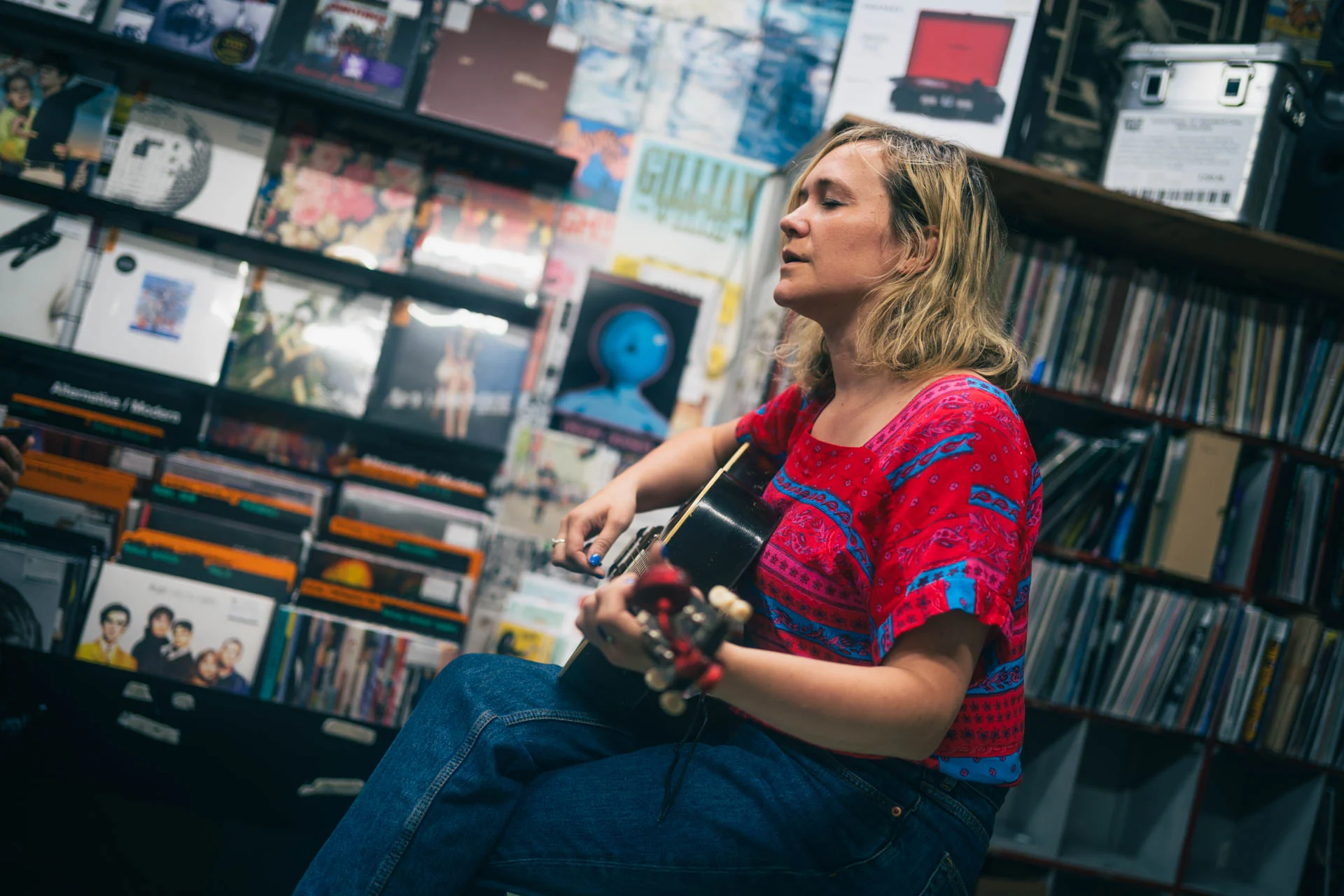
End note: I went to see Brigid Mae Power performing at the Cluny in Newcastle. It was very atmospheric, and Power’s singing was amazing. She played guitar and was joined by Ruth Clinton of Dublin trad band Landless, who accompanied on keyboard and sang harmonies. Their singing together was absolutely captivating. Needless to say, I enjoyed it very much.
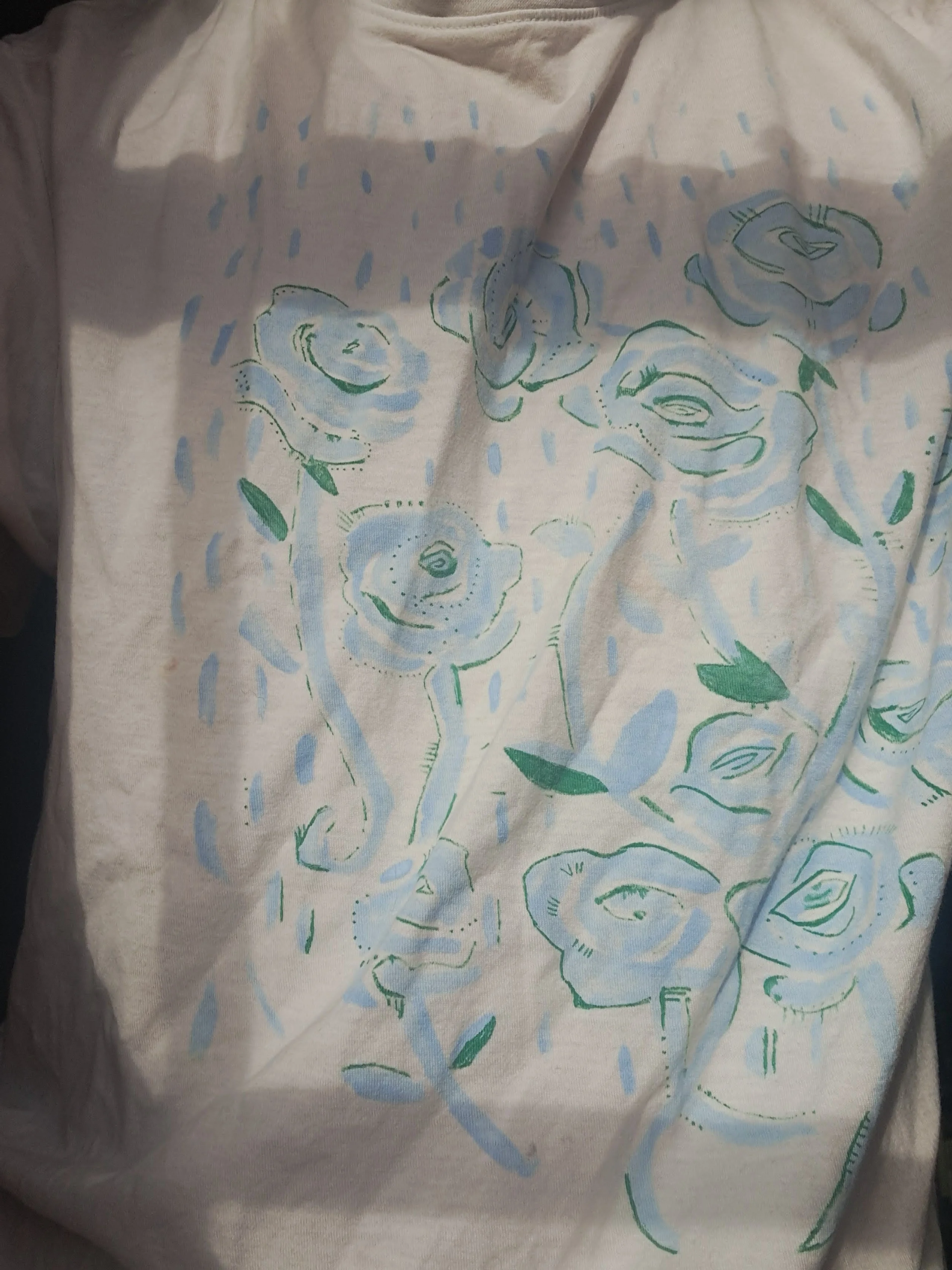
I also got this T-shirt, painted by B.M.P.!