 Source: Pinterest
'Mad As Rabbits' is the final track from Panic! At The Disco's second album Pretty. Odd. The album is an ode to 1960’s rock and roll, full of drug fuelled imagery and heartfelt love songs. By choosing 'Mad As Rabbits' as the album’s closer, the band leaves us with the almost urgent plea to “reinvent love.”
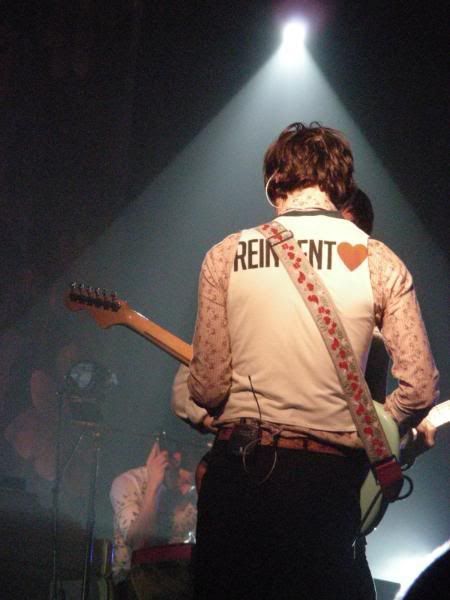
In many ways, this simple statement epitomises the band’s creative direction at the time. Trading the emo bangs for mop tops, and guy-liner for floral shirts and waistcoats, they had completely reinvented their sound and image. This was a drastic change for a group of scene kids barely out of their teens.
There was also a huge shift in their lyrics. Ryan Ross’ lyrical talent was already evident on the band’s debut, A Fever You Can’t Sweat Out, leaning more towards the melodrama and poignancy of the emo genre. Pretty. Odd demonstrates a newfound maturity, his lyrics becoming more introspective and poetic. It makes sense to end the album with this sentiment, which could be nothing more than a nod to the band’s departure from the early 2000s emo scene.
Not one for going into detail about his lyrics, Ross says the song is simply about a “character that is in the calendar business.” On the surface, 'Mad As Rabbits,' is exactly that: it tells the story of someone struggling to reconcile their true identity with traditional values, driven mad by the mundanity of his life. Yet, in live performances Ross has also described it as a love song, one about “universal love.” Unravelling Ross’ often bizarre imagery and references, this idea of universal love becomes more and more suggestive of queer love. With this in mind, I’d like to explore how the song lends itself to a queer interpretation, as well as discussing its various literary influences.
(Note: this article is not speculation about the musician’s personal lives, just an analysis of one of my favourite songs).
Verse 1:
“Come save me from walking off a window sill/ Or I’ll sleep in the rain/ Don’t you remember when I was a bird/ And you were a map?”
The first lines find our protagonist day-dreaming. He is reminiscing about a time of complete freedom, even hinting at a relationship in which he was the “bird” - weightless, untethered - and his love interest was the “map” that guided him. He had a direction but was not bound by it. This is also the only use of first person in the song. The following lines interrupt our protagonist’s thoughts, pulling him into the harsh present.
“And now he drags down miles in America/ Briefcase in hand/ The stove is creeping up his spine again/ Can’t get enough trash.”
The switch to third person narration suggests the detachment he feels from his own life. He is no longer soaring across a map, but dragging himself to and from work; he has become weighed down with the expectations of being a typical family man. Amid all of this, there are signs of another life calling out to him, as indicated by the “stove creeping up his spine.” Ross is a well-read songwriter, and 'Mad As Rabbits' is no exception to his literary tone. This line is a direct reference to William S. Borough’s Naked Lunch, a novel which depicts themes of drug addiction. “That old stove climbing up my back,” refers to a method of using stove gas and powdered milk to get high. Our protagonist is using drugs as a way to indulge these hidden desires.
Chorus:
“He took the days for pageant, and became as mad as rabbits/ With bushels of bad habits, who could ask for anymore?/ Yeah, who could have more?”
Here he is spiralling. Taking the days for “pageant” could refer to the superficial aspect of his life. As with the image of the working man conjured up in the first verse, it implies an element of performance - one that his heart isn’t in, thus making him go mad. Alternatively, his going mad could be the result of the drug-taking just mentioned. Ross utilises the psychedelic backdrop of Lewis Carroll’s Alice in Wonderland, as his protagonist falls deeper down the rabbit hole. These inebriated moments perhaps offer him some respite from the role he is acting out.
The chorus concludes with the question, “who could ask for anymore,” sung with such sarcasm that further accentuates how out of touch the character has become. There is obviously so much more he wants from life, but he has given up trying to attain it. Altogether, the first verse and chorus introduce us to someone who is becoming increasingly exasperated with their life.
Verse 2:
“His arms were the branches of a Christmas tree/ Preached the devil in the belfry/ He checked in to learn his clothes had been thieved/ At the train station.”
These lines are exemplary of the "sinful" parts of himself. This could simply refer to the drugs, with the Devil representing the dark forces that bind him. However, the devil may not be all negative. This line notably contains a reference to The Devil in The Belfry by Edgar Allen Poe. The short story is set in the fictional Dutch town Vondervotteimittiss, in which an obsession with clocks and time-keeping reigns. All the houses look the same, and there is something bleak and oppressive about it. When the town is invaded by the titular Devil - who attacks the bell-ringer and makes the clock strike thirteen times - it is sent into chaos. The Devil disrupts their perfectly regimented lifestyle, but in many ways frees them. By alluding to this, Ross recasts the destructive as creative. His devil offers the protagonist the chance to be his true self, one that is free and glowing (“the branches of a Christmas tree”).
This is immediately contrasted with the image of his clothes being stolen, adornment being completely stripped away. The protagonist silences the devil in the belfry, thus repressing part of his identity.
“The rope hung his other branch and at the end/ Was a dog called Bambi/ Who was chewing on his parliaments/ When he tried to save the calendar business/ He tried to save the calendar business.”
He is reaching the end of his rope, growing more and more exhausted with this whole performance. Honestly, I have no idea why Bambi is mentioned - I’m putting this down to the band’s drug use at the time. The next line, however, ties things together quite neatly. One of the few things Ross has said about the song is to do with someone working in the calendar business, so this is clearly relevant to the song’s overall message. This again recalls Poe’s clock-obsessed town; like the inhabitants, the man is trying desperately to conform to these time restraints. He is literally trying to save the calendar business, and loses his mind in the process.
Verse 3:
“The poor son of a humble chimney sweep/ Fell to a cheap crowd/ So stay asleep and put on that cursive type/ You know we live in a toy.”
The first two lines could be a literal description of the protagonist’s life, as a someone who became so work obsessed they fell into drugs and bad habits. Or, it could be a warning of what will become of him if things don’t change; either way, the lyrics are taking a more cautionary tone here.
In calling the world a “toy,” Ross confirms the superficial nature of the man' s life. Waking life, with all its expectations and trivialities, is no more authentic to him than his dreams. At least in his dreams, he is accepted and can follow his own path. Like the devil in the belfry, he needs to break out of this toy to become his true self - which is something queer fans can definitely relate to.
“You know that Paul Cates bought himself a trumpet/ From the Salvation Army/ But there ain't no sunshine in his song/ We must reinvent love, reinvent love, reinvent love.”
And here we have some of the most beautiful lyrics ever written. Ross’ name-dropping and various literary references culminate in these final lines, which, when broken down, proudly celebrate queerness. Paul Cates is likely referring to the LGBTQ+ activist. As public education director for the Lesbian and Gay Rights Project of the American Civil Liberties Union, Cates has written numerous articles defending gay and trans rights.
Very literally, to “trumpet” is to proclaim something loudly, linking back to the belfry and idea of public speaking. Where our protagonist once tried to repress his identity, he now declares it openly. The trumpet is thus a tool of expression, and adds a nice gay touch to the band’s use of brass throughout the album.
This proclamation is not without its setbacks; we are told there is “no sunshine in his song,” suggesting judgement and rejection. As we reach the song’s refrain, it becomes clear that the protagonist can only find acceptance if we completely destroy - and reinvent - the concept of love.
My connection to this one line runs deep. Back in the day I made my own badge with “reinvent love” written on. I’d wear it everyday on my school blazer, years before I even came out as gay. The line itself is taken from Arthur Rimbaud’s A Season in Hell:
“I don’t love women. Love has to be reinvented, we know that.”
Rimbaud was an openly gay writer, and A Season in Hell exemplifies his surreal and hallucinatory style. The fourth section, from which the quote is taken, sees Rimbaud lamenting his descent into Hell after being enticed by a fiendish lover. Again, this recalls the devil in the belfry, further hinting at our protagonist’s relationship with another man. Although the relationship is destructive, Rimbaud hints that the very nature of it can challenge, and change reality:
“Beside his dear body, as he slept, I lay awake hour after hour, night after night, trying to imagine why he wanted so much to escape from reality. No man before ever had such a desire. I was aware - without being afraid for him - that he could become a serious menace to society. Did he, perhaps, have secrets that would remake life?”
Ross reconfigures this hellish imagery with love and (queer) joy. What the world sees as sin is simply love, and this truth is life-changing. The protagonist realises it isn’t him who needs to change, but our definition of love. Even the music has a soaring quality here, mimicking this newfound liberation and circling back to the idea of flying introduced in the very first lines.
Having just watched the latest Stranger Things episodes, I couldn’t help but think of Robin's speech about self-acceptance:
“I just needed to stop being so goddamn scared. Scared of… who I really was. Once I did that, oh, I felt so free. **It’s like I could fly,** you know?”
On that note, 'Mad As Rabbits' is the perfect end to a perfect album. The song has so many layers to it, and brilliantly showcases Ross’s alchemical and literary approach to song-writing. Drawing on the surreal and fantastical, he weaves these influences into what is arguably a celebration of queer love. Seventeen years on, its message is just as powerful.
We must reinvent ♡