 Source: postpunkmonk.com
Character studies were omnipresent in the Britpop movement, almost as omnipresent as they were through the guitar music of the 1960s and the absurdist, almost laughable, caricatures of The Kinks, The Beatles and Barrett-era Pink Floyd. Bands like Pulp and Blur utilised this lyrical tradition through their satirical observations of the class system, suburban monotony and the overall British experience. Elsewhere, Suede imagined a drug-induced hyperbole of loneliness, ferality and decay influenced by English romanticism, which became commonplace in their lyricism. This is embodied through ‘Heroine’.
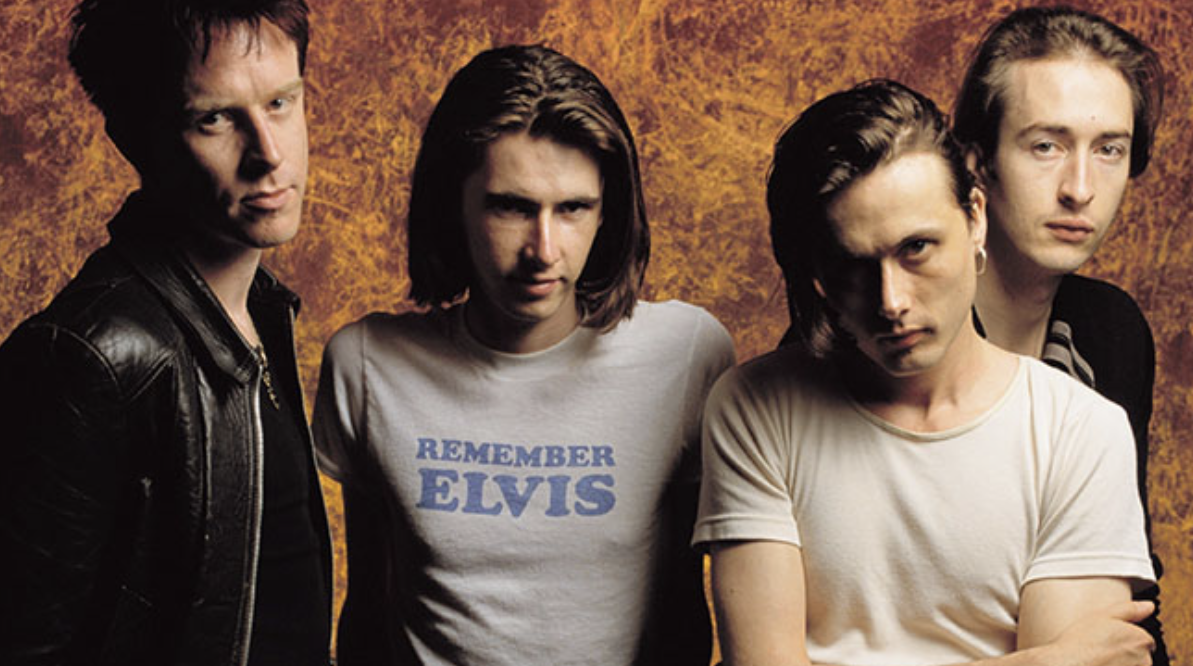
Suede have always focused on creating dark atmospheres, through pairing Brett Anderson’s icy and emotional vocal tone with Bernard Butler’s fuzzed-out, reverberating melodic jangle. Their 1994 album Dog Man Star does exactly that, with the band expanding their previous influences of David Bowie and The Smiths, to incorporate other sounds of gothic post-punk (Joy Division’s Closer) and art rock (Kate Bush’s Hounds of Love), as well as experimental and progressive-rock inspired production.
What is Heroine About?
Despite the song's explicitly homophonic title, the song isn’t actually about heroin. While many alternative songs of the late 80s/early 90s personified heroin as a woman that the narrator sought pleasure in (The Stranglers’ ‘Golden Brown, The La’s ‘There She Goes’), Anderson overturns this through adopting the perspective of a hormonal adolescent who is trapped in pornography:
“I’m aching
To see my heroine,
I’m aching
Been dying for hours and hours”
Anderson’s character studies consist of exclusively tragic characters, almost like the unhinged homosexual youth in ‘Animal Nitrate’. The narrator’s ‘aching’ and ‘dying for hours and hours’ embodies his wolfish sexual desires in the same way that Hugh Cornwell portrayed his drug use.
Romanticism in Suede’s lyricism
Throughout Anderson’s songwriting, which compares to the dark introspection of Joy Division, as well as the literary and otherworldly lyrics of Pink Floyd and Kate Bush, Suede manages to paint a landscape of urban desperation and raw English romanticism. This is inspired by poets like William Blake and Lord Byron, as well as bands like The Smiths.
While Blur often alluded to these themes through their wry portrayals of 18-30 holidays, Sunday afternoons and seedy middle-class cartoons, Suede weren’t all over this flag-waving nostalgia that looked back to post-war Britain or comedy aspects, akin to the Carry On films.
The song opens with a line directly borrowed from Lord Byron’s 1814 poem, 'She Walks in Beauty': “She walks in beauty like the night”.
However, instead of developing her beauty, Anderson’s narrator goes to likening Marilyn Monroe, one of the most popular sex symbols of the 1950s, to a divine goddess of love:
“Pornographic and tragic in black and white,
My Marilyn, come to my slum for an hour”
This lyric not only pays homage to Monroe as a figure of the past, in a similar fashion to Anderson’s hallucinogenic portrayal of James Dean in ‘Daddy’s Speeding’; it also mentions her in relation to a mythical goddess, as Anderson outlined:
These mythological allusions don’t end in his description of Monroe, but they continue up to the reintroduction of Byron’s line in the third verse, with the mentioning of Armageddon: “Armageddon is bedding this picture, alright”.
The narrator not only imagines his heroines, but also imagines them being brought to sleep with him through forces of destruction. It’s an image of desire and ecstasy, but also waiting to be torn down by a greater force. This idea evokes the work of Romantic poet William Blake, who widely influenced Anderson’s lyricism on the album. Blake wrote many works surrounding the concept of Armageddon, such as his 1803 poem 'Auguries of Innocence', which juxtaposes the beauty of the natural world with its destruction:
“Kill not the Moth nor Butterfly,
For the Last Judgment draweth nigh”
This character’s addiction is only made worse through the second verse. Here, it's reveals that these aren’t even real people, and instead are his own fantasies entrapped in various media forms that appear in his dreams:
“She walks in the beauty of a magazine,
Complicating the boys in the office towers,
Rafaella or Della, the silent dream”
Despite Suede's flirting with drug-influenced lyricism through songs like ‘Animal Nitrate’ and ‘Daddy’s Speeding', ‘Heroine’ is not actually a song about smack. Nonetheless, it remains one of Suede’s best songs, birthing their darkest character to contrast with the satire that often dominated Britpop.