 Image via lozferatu
Listen, listen;
past the sirens, and the shouting, and
the clatter of dishes being washed, whilst
the television broadcasts a cold-blooded
battering— the third this week— you must listen:
to the tip-toeing throbs; that stubborn knocking
on your ribcage, the measured gaps between thuds;
listen, to how faithfully it goes on,
how stubborn, how careful;
though it knows, so very well,
the pain of the world it has been tasked with enduring.
We come into existence with our hands reached outwards.
We are immediately blinded, and then cured. We are soft-skulled, and open-palmed, with hearts already beating, furiously, on behalf of lives that have scarcely begun. The universe, at first, is no larger than the arms that hold us. We know nothing of war, or hunger, or the thousand little cruelties by which a person might be undone. We know only warmth;
the hand-drawn map
of a face bending close;
and the magnificent assurance that,
when we cry, somebody might come.
That is our introduction to life, before language, or reason, or the first sordid understanding of what it means to lose something. It is only,
this pulse, this pulse;
the soft-animal instinct to be held.
You must once have thought the whole world was warm enough to cup in your hands.
But time passes.
The years will snarl and gnash their yellowed teeth;
scraping the glitter from your hair, and the bluebirds
do not look as blue as you remember;
and so you learn, you learn, the great machinery
of living; the slow and merciless accumulation of things
that cannot be undone; the peculiar art of how to breathe
with some heavy-cloaked pressure on your chest,
and what strange things this pressure can make of us.
We may sometimes think it would be kinder to love nothing at all;
after all, the heart can close like a house abandoned for winter—
it is unnerving how readily it can master the hardness of stone,
or how quickly an open hand finds comfort in the clench of a fist.
We think, maybe, it is simpler to pass through crowds of people;
brush past the shoulders of charred-edge silhouettes,
(each one carries some private and immeasurable sorrow);
and see nothing but the inconvenience
of their bodies in our way.
We learn to make a spectacle of suffering; to give it a name, and a number, and a place in the morning paper. We learn to look away, and,
despite being so intimately acquainted with pain,
(the exquisite humiliation of loneliness;
(the terror of loss; the agonising smallness
of being a frightened creature in an unsparing universe)
we still find occasion to inflict it;
though we know we have all been children, who have all cried for somebody to come.
There is not a heart alive that has not, at some point, depended upon the mercy of another.
And so, you may think, how terribly have we turned out.
What terrible things we have made of one another.
You may give up on hoping for the world to be gentle, when it has demonstrated, so very thoroughly, its capacity to be otherwise. You may think it only knows to continue turning;
hauling the great weight of the living
and the dying and the dust of the dead
on its shoulders, around the sun,
with its signature scalding apathy.
You’ve learnt to swallow your horror with your breakfast.
This is surely enough to fill us with disdain. This is surely enough to make us hate the world.
But listen;
but listen–
because there is someone, somewhere, holding a cup to another person's lips.
There is a child carrying a broken-winged sparrow
in the cathedral of their palms;
a woman turning down the corner of a page,
because she has found something so beautiful,
that she cannot bear the thought of forgetting it;
and someone else is brushing the hair from a forehead, burning with fever, murmuring nonsense into the dark;
though there is nothing left to promise,
and no certainty that morning will come.
There are hands that tremble, and hands that steady them. There are voices that falter, and voices that answer. There are people who have been given every reason to become cruel,
and, who, with nothing left but
the wreckage of their own tenderness,
choose, still,
to be kind.
And someone has just pressed their lips to the face of the dying–
as though love, if given fiercely enough, might persuade the body to remain.
Well, of course, it cannot.
There is no tenderness great enough to bargain with death. Love, of even the utmost purity, cannot unmake the suffering of the world;
an embrace cannot put the stars back into a sky
that has already been emptied by smoke.
These are terrible truths, and there is no kindness in pretending otherwise. There is no forgiveness vast enough to grasp all that humanity has done to itself.
But, you must listen.
You must listen,
because,
there is music!—
and, look, look, there are
oil-paints, and friendship-bracelets,
and needle and thread; and there are smiles!—
there is folklore, and lullabies; and there are
flowers budding at the feet of crumbling gravestones, tended to by hands
that know perfectly well the futility of their labour–
but water them anyway!
How desperately, hopelessly, lovable it all remains.
Love;
love,
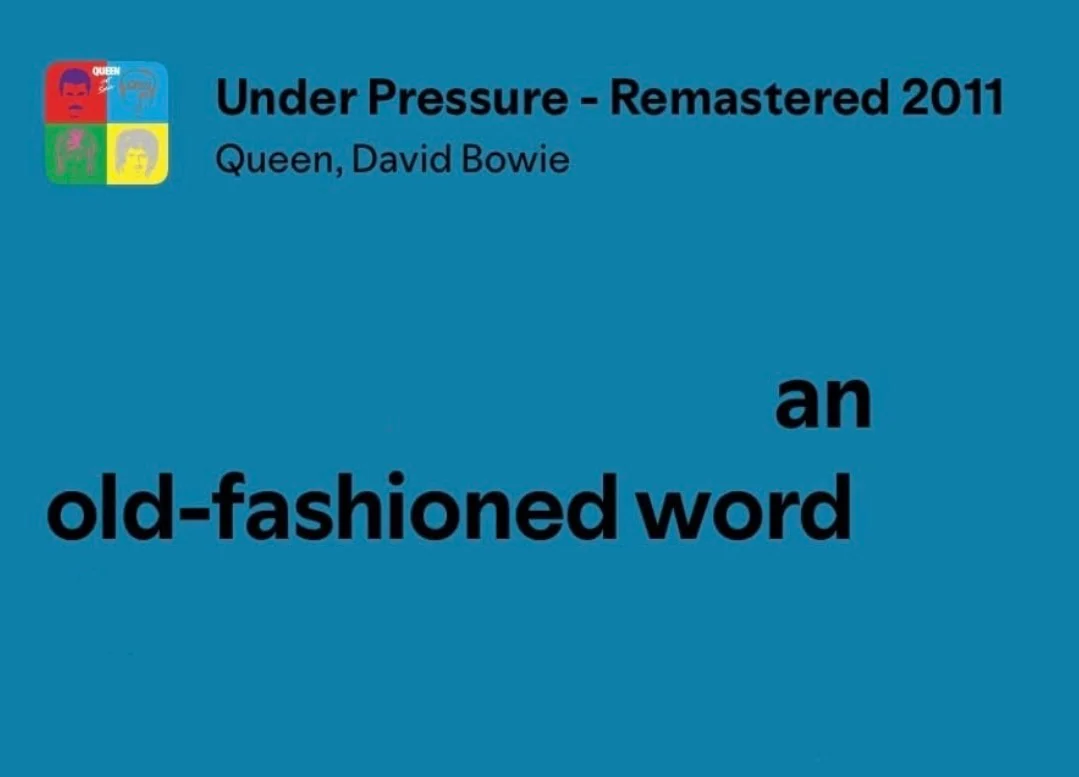
such an old-fashioned word;
such an insufficient, beaten-down,
beautiful little word;
dragged through centuries of ruin and worn thin
by our pleading; spoken over cradles and coffins and
mouthed through windows of frosted glass and departing trains;
preserved in letters whose writers have long since
turned to dust–
Love;
a word so small for something so difficult. So terribly easy to say, and so terribly hard to mean;
at times mistaken for possession, for forgiveness, for the simple pleasure of being adored—
and maybe there is something almost pitiful
in our continued devotion to it—
but it is older, and wiser, and more crinkly-eyed than anything you will ever know;
it has survived us,
and it always will.
And it asks something of us;
it always will—
to stop; listen, look;
the frightened creature in the stranger. The body
that has suffered, beneath the body you insist
on punishing. Beneath all our failures,
and the unforgivable things we tell ourselves,
a wide-eyed and glittery thing who asks
for nothing but a gentle voice;
Make room, make amends; make of our hands
something other than instruments of hurt—
open-palmed, waving to the birds and
the frail old man sat alone
on the park bench—
why not tuck a lucky pen in your pocket? Or
smooth down the vinyl stickers
on your hand-me-down guitar?—
for we are all so briefly here,
so briefly, so terribly briefly—
and what is there to do with this time?
What is there to do with all this pressure?— this grief,
this beauty; these unbearable desires
to be held, and to be good,
and to leave handprints on the walls of caves?
The world is heavy, and we love it, still.
We bend to lift the fallen thing. We open the door, and the window, and the arms we had sworn to keep folded, and we’ll listen, in awe,
at the heart that marches on,
with its foolish,
faithful beating.
There may always be more suffering than any single tenderness can mend. There may never be a world that does not break our hearts;
we will always carry this pressure, and crumble beneath it,
and spend our lives mending
its splits and hairline-cracks.
But we are still here, and our hands are warm.
The people beside us will not always be.
There is so little time to decide what we leave in one another's lives;
but whatever it is,
and whatever remains of us,
let it be love;
Let it be love.


